Pickling and Fermentation
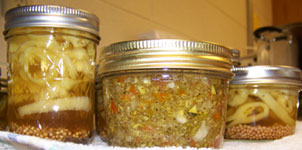 Pickling combines spices, sugar and vinegar with fruits and vegetables to create a unique sweet-sour flavor yet retain a crisp, firm texture. Firming agents are optional.
Fresh Pack or Quick Process Pickles - This method involves a boiling hot pickling mixture of vinegar, spices, and seasonings. The food may be brined prior to adding the pickling liquid. The end result is an easy to prepare pickle with a tart flavor. Allow them to stand several weeks after heat processing to improve the flavor.
Fruit Pickles - Whole or sliced fruits are simmered in a spicy, sweet-sour syrup made with vinegar or lemon juice prior to canning.
Relishes - Chopped fruits and vegetables are cooked in a spicy vinegar solution to the desired consistency prior to canning.
Pickling Other Foods
Fruit Pickles - Whole or sliced fruits are simmered in a spicy, sweet-sour syrup made with vinegar or lemon juice prior to canning.
Relishes - Chopped fruits and vegetables are cooked in a spicy vinegar solution to the desired consistency prior to canning.
- Preserving Cucumbers pdf - Kansas State University
- Conservas Frescas, Conservas Seguras, Pepinos pdf- Kansas State University
- Pickled Products pdf - USDA Complete Guide to Home Canning
- Homemade Pickles and Relishes pdf - University of Wisconsin
Pickling Other Foods
- Preserving Peppers pdf - Kansas State University
- Conservas Frescas, Conservas Seguras, Los Chiles pdf - Kansas State University
- Making Pickled Peppers - Colorado State University
- Pickling Vegetables - Oregon State University
- Pickling Fish and Other Aquatic Foods - Oregon State University
- Pickling - National Center for Home Food Preservation
- Preserving Horseradish - Oregon State University
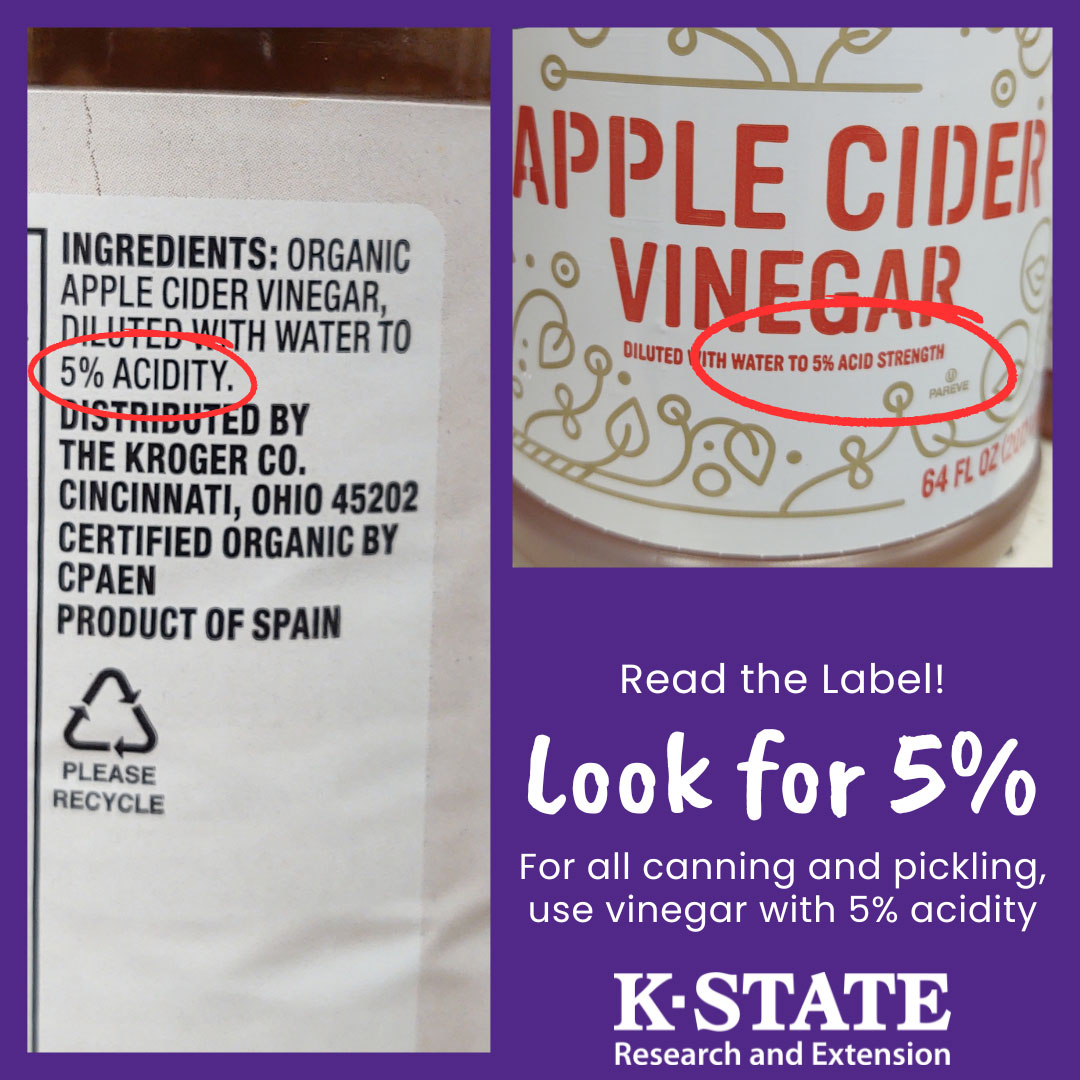
Always read the label to be sure the vinegar has 5% acidity. There are many brands of vinegar that are not at the 5% level.
Advice from the National Center for Home Food Preservation pdf - National Center for Home Food Preservation
Advice from the National Center for Home Food Preservation pdf - National Center for Home Food Preservation
The brining process involves soaking the food in a brine for several weeks. Brining changes the color, flavor, and texture of the food.
Fermentation produces lactic acid to help preserve the food. Some foods are brined, but not cured. These will have vinegar added to them for preservation.
Fermentation produces lactic acid to help preserve the food. Some foods are brined, but not cured. These will have vinegar added to them for preservation.
- Taking a New Look at Fermented Foods pdf - Kansas State University
- Understanding and Making Kimchi - Colorado State University
- Understanding and Making Kombucha - Colorado State University
- Dill Pickles - National Center for Home Food Preservation
- Sauerkraut - National Center for Home Food Preservation
- Suitable Containers, Covers and Weights for Fermenting Foods - National Center for Home Food Preservation
- Problems and Solutions for Pickled Foods - National Center for Home Food Preservation
- Problems and Solutions for Fermented Foods - National Center for Home Food Preservation
- Pickle Problems - University of Minnesota
- Pickle Fact Sheet pdf - Oregon State University
- Selecting Cucumbers - National Center for Home Food Preservation
- Salts Used in Pickling - National Center for Home Food Preservation
- Low-Temperature Pasteurization Treatment - National Center for Home Food Preservation
- Making Flavored Vinegars pdf - Colorado State University Extension
- Using Leftover Pickling Brine - National Center for Home Food Preservation
Pickling without Sugar or Salt
- Pickles for Special Diets - National Center for Home Food Preservation