Drying and Dehydrating Food
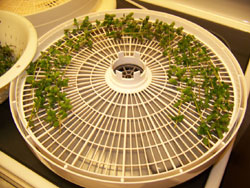 One of the oldest methods of food preservation is dehydration. It is simple, safe, and easy to do. Dehydrated foods take up less storage space and do not require refrigeration. The food is lightweight which makes it ideal for camping as well as an anytime snack.
Dehydration removes moisture from the food. This prevents bacteria, yeasts and molds from growing and causing spoilage. Dehydration also slows enzyme activity in food which can cause color, texture, and flavor changes.
- Let's Preserve: Drying Foods and Home - University of Nebraska-Lincoln
- Leathers and Jerkies - Colorado State University
- Drying Fruits and Vegetables - National Center for Home Food Preservation
- Vegetable Leathers - National Center for Home Food Preservation
- Drying Foods - New Mexico State University
- Drying Herbs - National Center for Home Food Preservation
- Pumpkin Seeds - National Center for Home Food Preservation
- Sunflower Seeds - National Center for Home Food Preservation
- Dry Meat Safely at Home pdf - Kansas State University
- Secando Carne en Casa en Forma Segura pdf - Kansas State University
- Preparing Safe Jerky - National Center for Home Food Preservation
- Jerky: A Native American-inspired snack we all can enjoy today - North Dakota State University
North Center Food Safety Extension Network webinar - 2025
Freeze Drying Foods: Science, Safety, and Cottage Industry
- Let's Preserve: Drying Foods at Home - University of Nebraska-Lincoln
- Preserving by Home Freeze Drying - Iowa State University
- Let's Preserve: Freeze Drying - Penn State University
- How To Freeze Dry - Utah State University
- Food Dehydrators - National Center for Home Food Preservation
- Sun Drying - National Center for Home Food Preservation
- Vine Drying - National Center for Home Food Preservation
- Packaging and Storing Dried Foods - National Center for Home Food Preservation